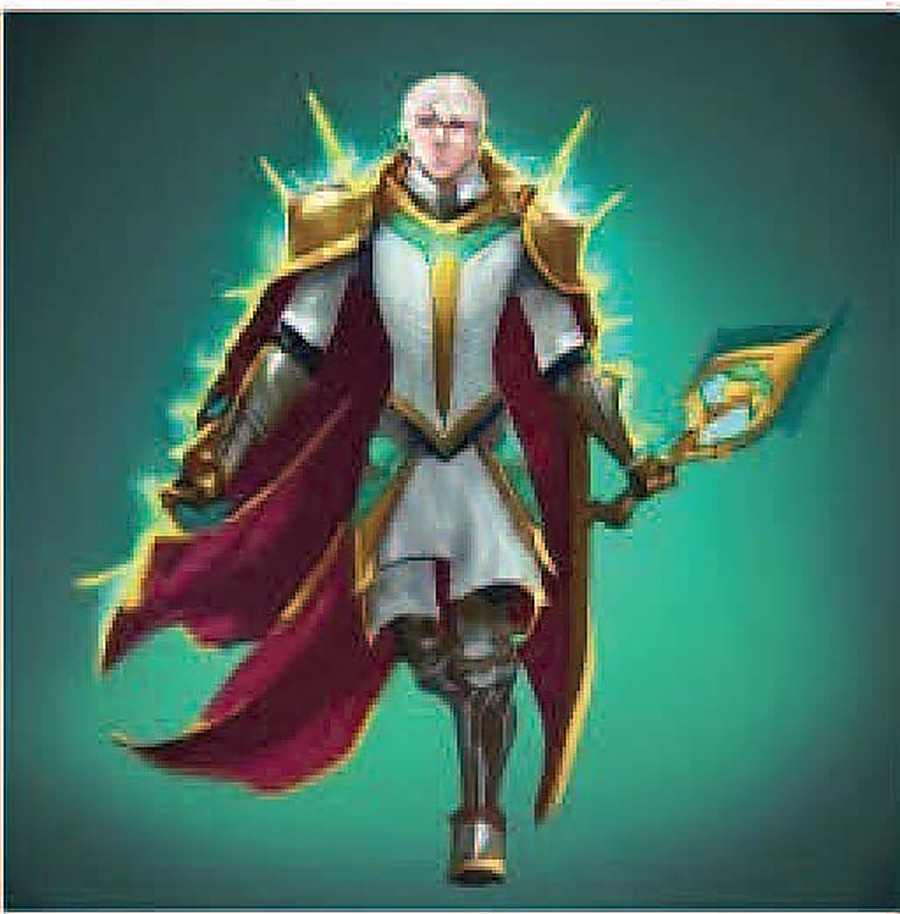
Olivia and the Wisdom Warden — Turning Knowledge into Wisdom
Olivia, a diligent Year 10 student, often felt she was drowning in information. Between textbooks, websites, videos and a dozen open browser tabs, every assignment seemed to grow larger the more she read. One gloomy afternoon, overwhelmed and unsure where to even begin, she escaped to the local library hoping the quiet might help her think.
As she wandered the shelves, feeling lost among the endless volumes, she noticed a scholarly figure seated at a corner table, absorbed in a leather-bound book. It was the Wisdom Warden. Sensing her hesitation, they looked up with calm, thoughtful eyes and invited her to sit. "Knowledge is the key to understanding," they said warmly. "Let us begin this journey together."
Olivia explained her problem: there was simply too much to know, and she could never tell what mattered. The Warden nodded. "Knowledge is a vast sea," they said, "and it is natural to feel adrift. But learning is not about collecting every fact. It is about learning to navigate — with purpose, and with good questions." For the first time, Olivia felt her panic begin to ease.
Their first lesson was about questions. The Warden showed her that a strong question is like a map: it tells you which facts you actually need and which you can leave behind. Instead of trying to read everything about her history topic, Olivia narrowed her research to one clear question and suddenly knew where to look.
Their second lesson was about judging sources. "In the forest of information," the Warden said, "some trees bear the sweetest fruits of truth, while others only obscure your path." They taught Olivia to ask who wrote something, why they wrote it, and whether other trustworthy sources agreed. She learned to tell a careful, credible source from a loud but empty one — a skill she realised she needed far beyond the classroom.
Their third lesson was the difference between knowledge and wisdom. "Knowing a fact is only the beginning," the Warden explained. "Wisdom is knowing what to do with it." They reminded her to weigh evidence, to consider consequences, and to give credit through proper citation, because honouring the people who create knowledge is part of using it well. Knowledge, they said, guides — but wisdom decides.
Olivia left the library that day changed. She finished her assignment not by reading more, but by thinking better — asking a clear question, choosing trustworthy sources, and drawing her own careful conclusion. In the weeks that followed she even started a small study group, sharing what she had learned so her friends could navigate the sea of information too. The Wisdom Warden had given her more than research skills; they had shown her that true understanding is not measured by how much you know, but by how wisely you use it.
Your turn — short-answer questions
- The Wisdom Warden says "knowledge guides, but wisdom decides." Using the story, explain the difference between knowing a fact and using it wisely.
- Olivia learned to judge whether a source could be trusted. Describe how you could check whether information you find online is reliable before using it in your own work.
For the classroom
Teacher notes — activities, reflections and assessment for this story.
Ask a strong question: Students turn a broad topic into one focused research question, then discuss how a good question narrows down which facts they actually need.
Judge the source: Give students a mix of reliable and unreliable sources and have them decide which to trust by asking who wrote it, why, and whether other sources agree.
Cite it right: Students practise recording and citing sources properly, discussing why crediting others is part of using knowledge wisely.
Debate and assess: Students research a topic, form an evidence-based argument, and debate respectfully; assess their ability to reason logically, weigh evidence and respond to other viewpoints.
Ethan and the Post He Almost Shared
Ethan was scrolling before school when a post stopped him cold. It claimed that a local park — the one where his little sister played — was about to be closed and sold off. The post was angry, full of capital letters, and already shared thousands of times. His thumb hovered over the share button. Everyone needed to know. But something the Wisdom Warden had once told him tugged at the back of his mind: *knowing a thing and knowing it is true are not the same.*
He found the Warden that afternoon in the school library, exactly where a Year 10 might expect to find them. "It felt true," Ethan admitted, showing them the post. "And it made me angry. I almost shared it before I even finished reading." The Warden nodded slowly. "Strong feelings are the current that carries misinformation the fastest," they said. "Wisdom is learning to pause in the current, not be swept along by it."
Together they treated the post like a source to be judged, not a fact to be spread. First they asked who had written it, and found only an anonymous account made a week earlier. Second they looked for the evidence behind the claim — a council document, a news report, an official notice — and found none. Third they checked whether any trustworthy source agreed, and discovered instead a council page confirming the park was staying exactly where it was. The frightening post was not information at all. It was a rumour dressed up as one.
"Here is the hardest part," the Warden said. "Knowing the post is false is only knowledge. Deciding what to do with that knowledge is wisdom." Ethan realised he had a choice to make. He could scroll past, or he could act well. He chose to reply calmly with a link to the council page, and he messaged the friend who had first shared it, kindly, so she could take it down.
Ethan left the library thinking about how close he had come to spreading fear about something that wasn't real. The Wisdom Warden had not simply taught him to spot a fake — they had shown him that in a world overflowing with information, the wise are not those who react the fastest, but those who pause, check, and then choose to do the right thing with what they find. Knowledge, he understood, guides. Wisdom decides.
Your turn — short-answer questions
- The Warden says "strong feelings are the current that carries misinformation the fastest." Using Ethan's story, explain how emotion can stop us from checking whether something is true.
- Ethan used three checks — who wrote it, what evidence backs it, and whether trustworthy sources agree — before deciding what to do. Describe how you would use these steps on a post you saw online.
For the classroom
Teacher notes — activities, reflections and assessment for this story.
Discussion: Why does emotional content spread so quickly online? How can a strong feeling make us more likely to share something before checking it?
Activity — Judge the Post: Give students a mix of real and fabricated posts and have them apply Ethan's three checks — author, evidence, corroboration — to decide what to trust.
Activity — Knowledge vs. Wisdom: Once students know a post is false, have them script a calm, wise response, discussing the difference between knowing the truth and acting well on it.
Reflection and assessment: Students reflect on a time they shared or nearly shared something unverified and what they would do differently; assess for critical-thinking steps and thoughtful, responsible decision-making.
Ayaan and the True Thing He Didn't Say
Bailey Nguyen had been away from school for three weeks, and Year 10 had filled the silence with stories. He had been suspended. He had been expelled. He had been arrested outside the shopping centre. The theories grew louder each day and none of them were true, and Ayaan was the only student in the year who knew it, because he had been waiting in the front office to hand in a permission note when a door was left open a little too long. What he overheard was quiet, and sad, and had to do with Bailey's family. It was not the sort of thing anybody would want announced at lunch.
The problem was that Bailey had made Year 8 miserable for Ayaan. There had been a nickname, and it had stuck for the better part of a year, and Ayaan had not forgotten a minute of it. So when the theories reached his table on Thursday and somebody said, "Ayaan, you're always in the office — you'd know," and eleven faces turned towards him at once, he understood exactly what he was holding. A fact nobody else had is the most valuable thing in a schoolyard. He said, "I don't know," and it came out thin and unconvincing, and it sat badly with him all afternoon.
He found the Wisdom Warden in the library after last period. "If I told them, I'd be stopping a lie," Ayaan said. "They're saying things about him that aren't true. Isn't the truth the point? Isn't that the whole thing you've been teaching me?" The Warden set down their book and considered him for a long moment. "The truth is where the question begins," they said, "not where it ends. A fact can be entirely true and still be a weapon in the wrong hands — and this afternoon, the wrong hands are yours. You want to correct a rumour. You also want to be the one who knew. Be honest about how much of each is in there."
So the Warden gave him three questions to ask before he ever spoke a private thing aloud. *Is it true?* Yes — he had heard it himself. *Is it mine to tell?* No. It belonged to Bailey, and Ayaan had come by it accidentally through a door that should have been shut. *What will it do?* And there Ayaan stopped, because the answer was obvious once he actually looked at it. It would not simply replace a false story with a true one. It would hand a family's worst month to a hundred people who had already shown, for three weeks, exactly what they did with information about Bailey Nguyen.
"Now the harder half," the Warden said. "Knowing what not to say is only the beginning. Silence on its own is not wisdom — it is just quiet. What can you do that is neither telling nor doing nothing?" It took Ayaan two days to act on that. He went to Ms Kaur, his year adviser, and told her what the year group was saying without repeating a single word of what he knew. Then at lunch on Friday he said the thing that cost him: "Whatever's going on with him, it's his business. Can we drop it?" He was called a suck-up. Somebody asked why he was defending Bailey of all people, and he had no answer he was willing to give.
The talk did not stop that day, but it thinned, the way talk does when nobody feeds it. Ms Kaur spoke to a few people. Bailey came back near the end of term, quieter than before, and gave Ayaan a small nod in the corridor that could have meant anything or nothing. Ayaan never told a soul, and nobody ever thanked him, because nobody knew there was anything to thank him for. That, he decided, was the shape of it. Wisdom rarely looks impressive from the outside; quite often it looks like being the person who had nothing interesting to say. Knowledge, he understood, guides. Wisdom decides.
Your turn — short-answer questions
- The Wisdom Warden tells Ayaan to be honest about how much of him wanted to correct a rumour and how much wanted to be "the one who knew." Explain why our motives matter when we decide what to share.
- Ayaan used three questions: is it true, is it mine to tell, and what will it do? Describe a piece of information you have heard about someone else, and work through all three questions on it.
For the classroom
Teacher notes — activities, reflections and assessment for this story.
Discussion: The Warden says silence on its own is "just quiet." What is the difference between staying out of gossip and actually acting well when a rumour is spreading?
Activity — The Three Questions: Give students a set of realistic scenarios and have them apply "is it true / is it mine to tell / what will it do" to each, then justify their decision to the class.
Activity — Neither Telling Nor Nothing: In small groups, students script two responses that shut down speculation without revealing private information, and identify which staff member they would take it to.
Reflection: Write about a time you knew something true about another person that you chose not to repeat. What did that choice cost you, and would you make it again?
Story 3 is part of the full pack
Unlock every hero's third story — plus all worksheets, quizzes and assessments — with a trial or a licence. Already have access? Open the link from your email on this device.