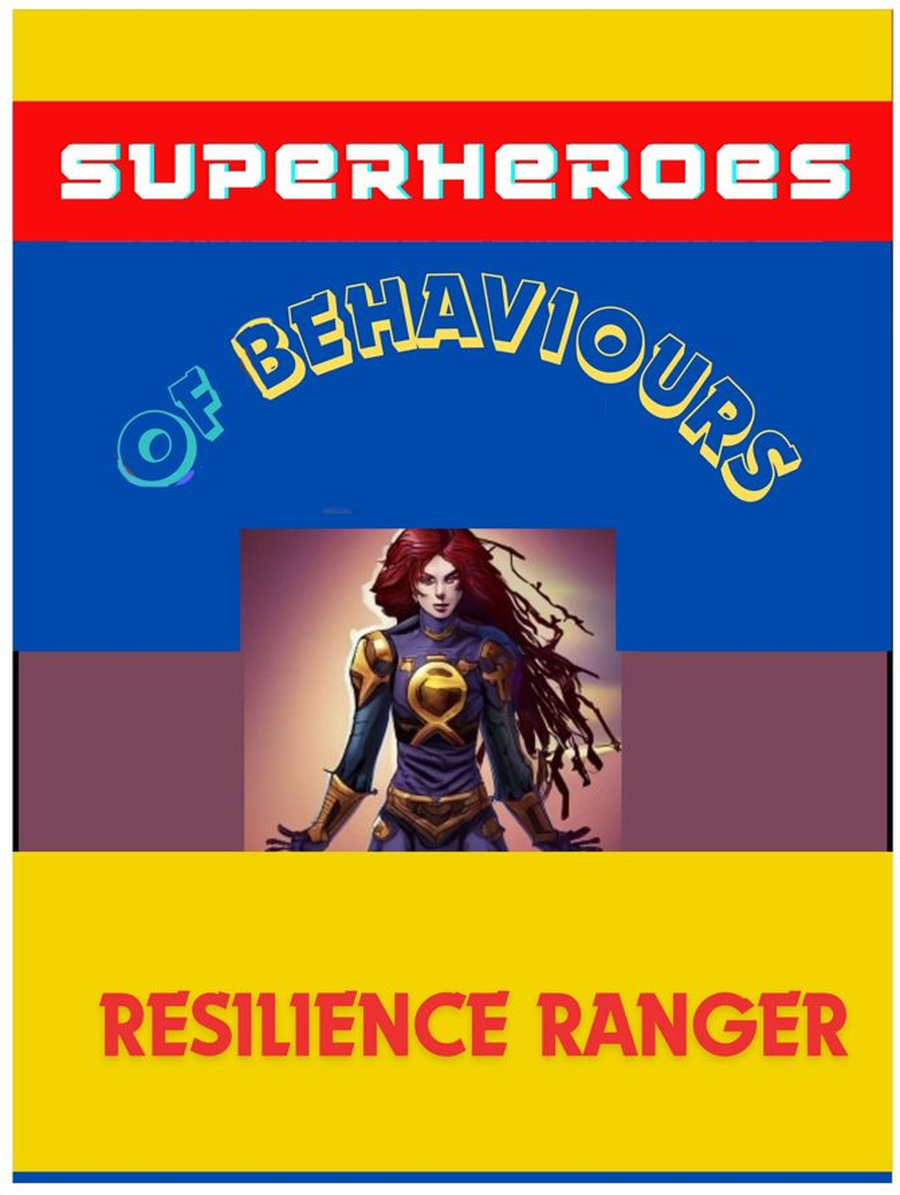
Jake and the Hardest Trick
Jake had loved skateboarding for as long as he could remember. Every day after school he would head to the local skate park, where the sound of wheels on concrete felt like home. He had set himself one big goal for the term: to land a kickflip cleanly in front of his friends. It looked simple when the older kids did it, and Jake was sure it would only take him a week or two to master.
But the trick refused to come. Day after day Jake pushed off, snapped the board, and landed badly — sometimes on the deck, more often on the ground. His knees were scraped, his confidence was fading, and the kickflip that had seemed so close now felt impossible. One grey afternoon, after slipping and falling for what felt like the hundredth time, Jake sat alone on the edge of the ramp, board upturned beside him, ready to give up for good.
That was when a figure crouched down next to him — the Resilience Ranger, a steady, weathered hero who looked like someone who had fallen a thousand times and stood up a thousand and one. "That looked like it hurt," the Ranger said gently. "How many times have you tried this trick?" Jake shrugged. "Too many. I'm obviously just not good at it. Maybe I should quit."
The Resilience Ranger smiled. "Every person who can land that trick fell exactly where you're sitting. The difference isn't that they never failed — it's that they treated each fall as information, not a verdict." The Ranger explained that resilience wasn't about never struggling; it was about how you respond when things get hard. "Bouncing back is a skill," they said, "and like any skill, you build it one attempt at a time."
Together they broke the huge, frightening goal into smaller pieces. Instead of trying to land the whole kickflip at once, the Ranger had Jake practise just the flick of the board first, then just the jump, then the two together over the grass where a fall wouldn't hurt. After each attempt, the Ranger asked Jake one simple question: "What was slightly better that time?" Slowly, Jake began to notice progress he had been too frustrated to see — his timing improving, his balance steadying.
The Ranger also taught Jake to talk to himself differently. Instead of "I always fail", he learned to say "I haven't landed it yet". Instead of comparing himself to the older kids, he measured himself against his own attempt from yesterday. On the days he felt like quitting, he took a short break, reminded himself why he loved skating in the first place, and came back to try again. Rest, he discovered, was part of rising again — not the opposite of it.
Weeks later, on an ordinary Thursday, Jake pushed off, snapped the board, and felt his feet land squarely on the grip tape as the deck spun perfectly beneath him. He had finally landed the kickflip — but what stayed with him even longer than that moment was everything the falls had taught him. Jake had learned the Resilience Ranger's greatest lesson: setbacks are not the end of the story, they are part of it, and no matter how tough it gets, we can always rise again.
Your turn — short-answer questions
- How did breaking the trick into smaller steps change the way Jake handled his failures?
- The Ranger taught Jake to say "I haven't landed it yet" instead of "I always fail". Describe a challenge where changing your self-talk could help you keep going.
For the classroom
Teacher notes — activities, reflections and assessment for this story.
Discussion: Can you think of a time you faced a challenge and considered giving up? What inspired you to keep going?
Activity — Break It Down: Choose a goal that feels too big, then work in pairs to split it into small, achievable steps like Jake did with his trick.
Activity — Reframe the Self-Talk: List some negative things people say to themselves after failing, then rewrite each one into a resilient, "not yet" version.
Reflection: How can resilience help you overcome obstacles in your own life? What helps you bounce back?
Assessment — Resilience Reflection: Write about a time you faced a difficult situation. Explain how you handled it, what you learned, and how you might use resilience strategies next time.
Maya and the Missed Audition
Maya had wanted the lead in the school play for as long as she could remember. She had practised her lines in front of the mirror, rehearsed the songs until she knew them by heart, and let herself imagine standing on stage under the lights. So when the cast list finally went up and her name sat beside a small background role instead of the lead, it felt as though the floor had dropped away beneath her.
She spent that afternoon in the library, staring at the same page of a book without reading a single word, certain that all her effort had been for nothing. That was where the Resilience Ranger found her — a steady, weathered figure who looked like someone who had been knocked down more than once and had always stood back up. "That looks like a heavy disappointment," they said gently. "Do you want to tell me what happened?"
"I did everything right and it still wasn't enough," Maya said. "Maybe I'm just not good at this. Maybe I should quit." The Ranger sat down beside her. "Missing out hurts — that's real, and you don't have to pretend it doesn't. But a setback isn't a verdict on who you are. It's information about where you are right now, and where you can grow."
The Ranger helped Maya separate the sting of the moment from the story she was telling herself. Instead of "I failed, so I'm not good enough", she practised saying "I didn't get this part yet". Then they looked at what she could actually learn. Maya gathered her courage and asked the drama teacher for honest feedback, and discovered it wasn't her talent holding her back but her projection and confidence — things she could genuinely build.
So Maya made a plan. She took the small role seriously, treating every rehearsal as practice, and joined a lunchtime drama club to work on the very skills the feedback had pointed to. On the days disappointment crept back in, she reminded herself why she loved performing in the first place, and rest, she learned, was part of coming back stronger — not the opposite of it.
Months later, at the next round of auditions, Maya walked in steadier and stronger than before. Whether or not she landed the lead this time, she had already won something bigger. She had learned the Resilience Ranger's greatest lesson: setbacks are not the end of the story, they are part of it, and no matter how tough it gets, we can always rise again.
Your turn — short-answer questions
- How did changing "I failed" to "I didn't get this yet" help Maya respond to the disappointment?
- Describe a setback you have faced. What is one thing you could learn from it to help you bounce back?
For the classroom
Teacher notes — activities, reflections and assessment for this story.
Discussion: Why can asking for honest feedback after a setback be more useful than giving up? What makes it hard to do?
Activity — Turn the Setback into a Plan: Choose a recent disappointment and map out three practical steps that could turn it into growth, just as Maya did.
Activity — Reframe the Story: List things people tell themselves after failing, then rewrite each one as a "not yet" statement that keeps them moving forward.
Reflection: Who and what helps you bounce back when things don't go your way, and how could you build more of that support?
Sione and the Load He Wouldn't Put Down
The maths half-yearly came back with 31% written in red at the top, and Sione folded it in half before anyone could see. That was the part that stung — he had studied. Since his mum had moved onto night shifts at the hospital, his evenings belonged to his little sister Talia: school pick-up, dinner, reading homework, the long negotiation of bedtime. He did his own work afterwards, at eleven, at the kitchen table, and more than once he had woken at one in the morning with his cheek stuck to the page. He was still turning up to school. He was still at league training twice a week. He was, he told everyone who asked, completely fine.
By the following week he had stopped believing that. He was falling asleep in period two, snapping at Talia over nothing, and quietly rewriting the story of himself: he wasn't tired, he was just dumb, and he had probably always been dumb and only recently found out. Trying harder was the only answer he could think of, so he tried harder, staying up until midnight and understanding less of it than before. On Thursday he sat on the bench after training with his boots still on, long after everyone else had gone, unable to make himself stand up.
That was where the Resilience Ranger found him — a steady, weathered figure who looked like someone who had been knocked down in more than one way and had always got back up. "Long week?" the Ranger asked, sitting down on the bench beside him. Sione shrugged. "I'm just not smart. I study and it doesn't go in." The Ranger looked at him for a moment. "You're carrying a house and blaming your legs for shaking. That's not a talent problem, mate. That's a load problem, and the two need completely different answers."
"Bouncing back isn't always about pushing harder," the Ranger went on. "Sometimes it's about putting part of the weight down on purpose so you can carry the rest properly. Try this, and use it every time you get knocked over. One, one and one. One honest sentence about what's actually happening. One small thing you can do today. And one person you tell." Sione shook his head straight away. "I'm not telling anyone." The Ranger nodded. "That's the one that works. It's also the one that costs, which is why almost nobody does it."
He did it anyway, badly, over the next fortnight. The honest sentence went to Ms Kaur on a Monday morning, in about eleven awkward words, and she gave him an extension and a seat in the homework room at lunch three days a week. The small thing was twenty minutes of maths at seven in the evening, before Talia's bath, instead of a foggy hour at midnight. And the person he told was his coach, which cost him the most — he stood in the change room and said he needed to miss Thursday trainings until the end of term. He lost his starting spot in round nine. Two mates decided he had dropped off. He let them think it.
The Term 3 exam came back with 58% on it. Not brilliant, not a comeback story anyone would film, but honest work he had actually understood, and he did not fold the paper over. He came back to Thursday trainings in the last month of the season and earned his position again from the interchange bench. "You didn't get tougher," the Ranger said the day he ran back on. "You got smarter about what you were carrying. That's the same thing, done properly." Sione had learned the Resilience Ranger's greatest lesson: setbacks are not the end of the story, they are part of it, and no matter how tough it gets — even when rising again means putting something down first — we can always rise again.
Your turn — short-answer questions
- Why did trying harder make things worse for Sione, and what did the Ranger's "one, one and one" change about the way he responded?
- Think of something you are carrying at the moment that is heavier than you let on. Write your one honest sentence, one small step for today, and the name of one person you could tell.
For the classroom
Teacher notes — activities, reflections and assessment for this story.
Discussion: Sione believed his marks meant he was "not smart". What else can be going on behind a poor result, and why do we so often blame ability first?
Activity — One, One and One: Students write a current challenge as one honest sentence, one small action for today, and one person they could tell, then discuss in pairs why the third step is the hardest.
Activity — Map the Load: In small groups, list everything a typical Year 10 student carries in a week, then sort each item into what can be shared, what can be paused, and what cannot move.
Reflection: Asking for help cost Sione his starting position. When is stepping back part of bouncing back rather than the opposite of it?
Story 3 is part of the full pack
Unlock every hero's third story — plus all worksheets, quizzes and assessments — with a trial or a licence. Already have access? Open the link from your email on this device.