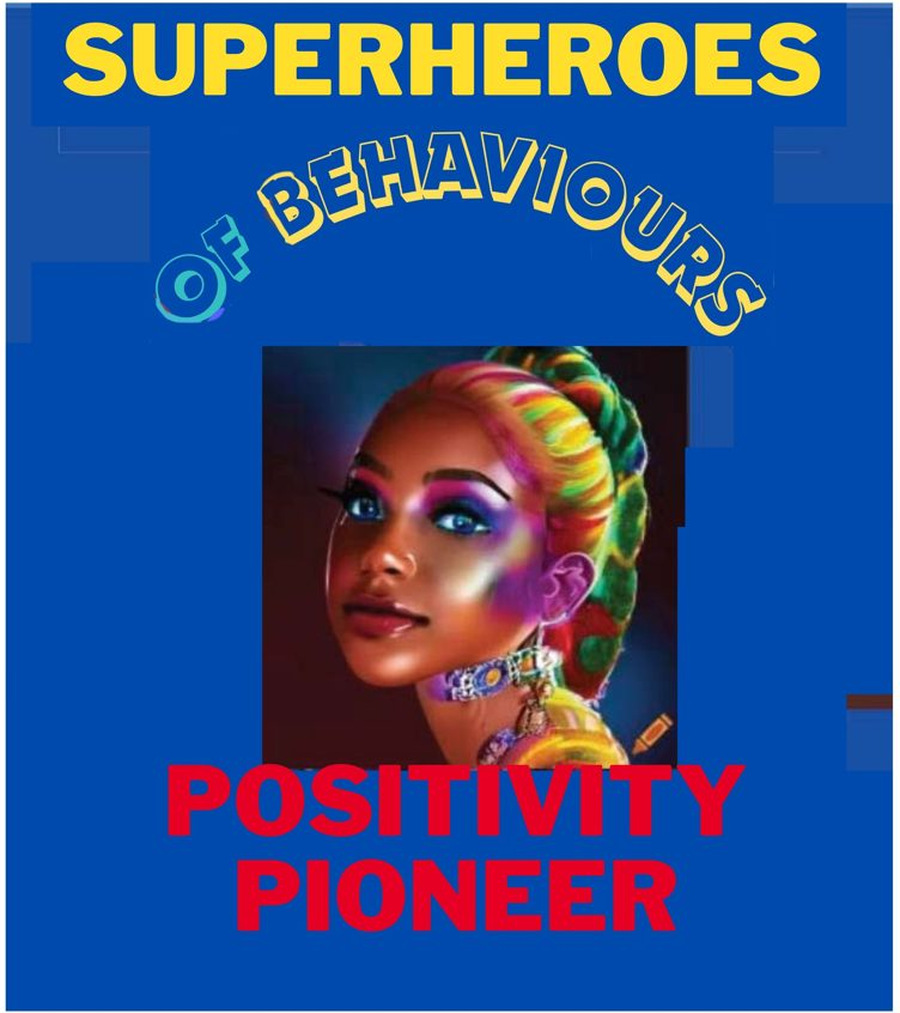
Sarah's Splash of Sunshine
Sarah's footsteps echoed on the wet pavement as she walked to school on a particularly gloomy morning. Dark clouds hung heavily over the suburb, and the rain fell in a steady, cold drizzle. She clutched her umbrella tightly, using it as a shield not only from the weather but from the grey mood that seemed to have settled over everything. Her Year 8 week had been a rough one — she had fallen behind on homework, missed the bus twice, and now even the sky seemed determined to match how flat she felt inside.
As Sarah trudged through the school gates, she noticed that almost everyone looked the same way she felt. Heads were down, conversations were short, and the usual chatter of the courtyard had faded to a mumble. It was as if the whole school had decided that a rainy day meant a miserable day, and there was nothing anyone could do about it.
At lunch, Sarah sat alone on a covered bench, picking at her food and watching the puddles ripple. That was when she spotted a burst of colour against all the grey. A small group of students had gathered around a blank wall near the canteen, and in the middle of them stood a girl named Mia, brush in hand, painting a bright mural across the bricks. Mia had wild, rainbow-streaked hair and an easy laugh that carried across the courtyard, and with every stroke the wall seemed to glow a little more.
Sarah watched from a distance, drawn in by the energy. She marvelled at how effortlessly Mia lifted the mood of everyone around her — cracking jokes, thanking each helper, and turning a dull corner of the school into something worth stopping for. For a moment Sarah almost walked away, sure she had nothing to add to a scene so cheerful. But something in her stirred, like a thin ray of sun breaking through the clouds.
Gathering her courage, Sarah stepped forward and quietly asked if she could help. Mia's eyes lit up, and without a second thought she handed Sarah a paintbrush and a pot of sunflower yellow. "Everyone gets to add something," Mia said warmly. "That's the whole point."
As they worked side by side, laughter slowly returned to the group. Sarah painted a wide yellow sun in the corner of the mural, and to her surprise other students began drifting over to join in, adding clouds, birds and words like "hope" and "kind". The gloomy day suddenly felt brighter, and the weight Sarah had been carrying since morning seemed to lift from her shoulders. She realised that positivity was not about pretending the rain wasn't there — it was about choosing to add colour anyway.
By the time the bell rang, the wall had become a symbol of exactly that. Over the following weeks Sarah found herself looking for small ways to pass the feeling on: greeting a nervous new student, thanking the canteen staff, complimenting a classmate's work. She had learned the Positivity Pioneer's greatest secret — that even on the darkest, wettest days, one small splash of optimism can light up a whole room, and that anyone, including her, has the power to be the one holding the brush.
Your turn — short-answer questions
- What changed for Sarah when she picked up a paintbrush and joined Mia at the mural?
- Sarah learned that positivity is about "adding colour anyway". Describe one small, realistic action you could take to lift the mood of someone having a hard day.
For the classroom
Teacher notes — activities, reflections and assessment for this story.
Discussion: How did Mia's attitude affect Sarah's outlook? Can you think of a time someone's positive energy lifted your own spirits?
Activity — Class Mural of Kindness: As a group, create a shared poster or digital board where each student adds one word, image or message that spreads hope.
Activity — Sunshine Log: For one week, record one positive thing you noticed each day and one kind action you took, then reflect on how it changed your mood.
Reflection: What strategies can you use to stay positive even during challenging times, without ignoring how you really feel?
Assessment — Positivity Reflection: Write a short reflective piece explaining what positivity means to you and how spreading it can affect a whole community, using examples from the story.
Noah and the Encouragement Locker
Noah had never thought of himself as someone who could change a room. A quiet Year 8 student at Riverdale High, he mostly kept to himself, but he noticed things other people missed — the way a friend went silent after a tough test, the way the whole class seemed to droop on grey Monday mornings. He wanted to help; he just never knew how, and he was sure that lifting anyone's mood was a job for the loud, confident students, not for him.
Then, on the heaviest Monday of the term, the Positivity Pioneer found him staring at a row of lockers. "You see it too," the Pioneer said. "The heaviness. Most people wait for someone else to lift it. You don't have to." Noah shrugged. "I'm not exactly the cheerful, outgoing type." The Pioneer smiled. "Good. Positivity isn't about being loud. It's about being deliberate."
Together they came up with a small plan. That night Noah cut a stack of coloured cards and wrote a single genuine message on each — "You worked really hard on that presentation," "I'm glad you sit next to me," "Today counts, even if it feels small." He didn't sign any of them. Before class the next morning, he quietly slipped one through the vent of a few lockers and hurried away, his heart thumping.
The reaction surprised him. By lunchtime, students were asking who had left the notes, and the courtyard buzzed with a lighter energy than it had shown in weeks. A girl he barely knew stood smiling at a yellow card in her hand. Noah said nothing, but something warm settled in his chest — the quiet satisfaction of having added a little colour without needing any credit for it.
Over the following weeks the idea grew beyond him. Others started leaving notes of their own, and a blank corkboard near the library slowly filled with messages of encouragement and thanks. What had begun as one nervous boy and a stack of cards became a habit the whole year level shared, and the grey Mondays never felt quite so grey again.
Noah learned the Positivity Pioneer's greatest secret — that spreading hope didn't require a big personality or a grand gesture. It only took paying attention to others and choosing, on purpose, to add something good. Even the quietest person, he discovered, had the power to light up a whole room.
Your turn — short-answer questions
- How did Noah spread positivity without being "loud", and why do you think his notes made such a difference?
- Describe one small, genuine message you could give someone this week — and who might need to hear it most.
For the classroom
Teacher notes — activities, reflections and assessment for this story.
Discussion: Noah "paid attention to others" before he acted. Why is noticing how people feel an important first step in spreading positivity?
Activity — Encouragement Board: As a class, set up a board where students leave genuine, specific compliments and encouragements for one week, then reflect on how it changed the room.
Activity — Deliberate Kindness: Each student writes three honest notes of appreciation for classmates and delivers them before the week ends.
Reflection: Why might a small, unexpected kind message mean more to someone than a big public gesture?
Halima and the Concert That Was Cancelled
Ten weeks of Tuesday rehearsals ended with a single email. The hall roof had failed its inspection, the building was closed until the holidays, and the Year 9 winter concert was off. Halima read it in the corridor and felt something drop out of her. She had practised her clarinet solo until her lip ached, and her grandmother had already booked the night off work to come. By the time the last bell went, the year group chat had turned into a long grey column of complaints — this school ruins everything, don't bother trying, nothing ever happens here — and Halima found herself scrolling it over and over, adding nothing.
Late that night she typed a message suggesting they could still play somewhere, anywhere, and hit send before she could stop herself. The replies came fast and cold. Ruby wrote, *not everything needs a Halima spin.* Someone else added a laughing face. Someone else wrote, *it's cancelled, get over it.* Halima deleted her message and lay in the dark feeling stupid and, worse, fake — as if wanting something good to happen was a performance she put on for other people. She decided she would not say anything cheerful in that chat, or anywhere else, for a very long time.
The Positivity Pioneer found her the next lunchtime in the empty music room, clarinet case unopened on her knees. "You went quiet," the Pioneer said. Halima shrugged. "They think I'm pretending. Maybe I am." The Pioneer sat down on the piano stool and waited until she looked up. "Read me what you wrote." Halima found the deleted message in her drafts and read it aloud, and it sounded thinner out loud than it had at midnight. "There's your problem," the Pioneer said gently. "You jumped straight to the good part. You skipped the true part. Everyone in that chat was hurting, and your message asked them to step over it. When you skip the true part, hope sounds like a lie — and people can always hear it."
"So try it in two halves," the Pioneer went on. "Name it, then add one thing. First, say the honest, unhappy truth out loud, the whole ugly size of it. Then add one small real thing that is still possible. Not the whole solution — one thing. That's all positivity ever is: telling the truth, then refusing to stop there." Halima wrote it that afternoon in the library and read it back three times before sending. *This is rubbish. I've practised that solo since April and my grandma took the night off and now none of it happens, and I'm filthy about it. Thursday lunch I'm playing it in the library anyway. Bring whatever you've been rehearsing.*
Four people came. One of them was a Year 7 boy with a ukulele who nobody knew. Ruby did not come, and did not speak to Halima properly for another fortnight, and Halima felt that absence every single day. But the following Thursday there were nine, and the one after that the librarian moved the study tables and there were twenty-two, sitting on the carpet between the shelves while a Year 9 girl played a piece she had written herself. Someone filmed Halima's solo on a phone and sent it to her grandmother, who watched it four times.
The concert was never reinstated, and the hall stayed shut all term. But something else grew in its place, and Halima kept using the same two halves long after — with a friend who had failed her licence test, with her little brother, with herself on the bad mornings. Say the true thing. Then add one small good thing you can actually do. She had learned the Positivity Pioneer's greatest secret — that hope is not pretending the roof didn't fall in, but choosing to add something anyway, and that even on the flattest, greyest week, one small splash of optimism can light up a whole room.
Your turn — short-answer questions
- Why did Halima's first message get shot down, and what made her second one work?
- Think of something in your life that is genuinely disappointing right now. Write the true, honest half of a "name it, then add one thing" message — then add the one small good thing you could actually do this week.
For the classroom
Teacher notes — activities, reflections and assessment for this story.
Discussion: Halima was accused of "putting on a spin". What is the difference between real positivity and pretending everything is fine, and why can the second one make people angry?
Activity — Name It, Add One Thing: Give students three disappointing scenarios and have them write a two-part response for each: one honest sentence about what is hard, then one small realistic action that is still possible.
Activity — Rewrite the Group Chat: Display an invented chain of complaints about a cancelled event and have small groups rewrite three of the messages so they stay honest but move the conversation forward.
Reflection: Being positive cost Halima a friendship for a fortnight. When has doing the encouraging thing made you unpopular, and what helped you keep going?
Story 3 is part of the full pack
Unlock every hero's third story — plus all worksheets, quizzes and assessments — with a trial or a licence. Already have access? Open the link from your email on this device.