Sam's Garden — Good Things Grow for Those Who Wait
Sam wanted everything to happen now. In Year 8 he quit guitar after a fortnight because his fingers still fumbled the chords. He deleted a drawing app when his first sketches looked nothing like the tutorials. If a video game level did not fall on the second try, the controller went flying. His grandad had a saying for it: "Sam, you plant a seed on Monday and dig it up on Tuesday to see why it hasn't grown." Sam never found that funny.
That autumn, Sam's grandad asked for help with the vegetable patch behind the house. Sam agreed, mostly because there was nothing else to do. Grandad handed him a packet of carrot seeds, thin as dust, and showed him how to press them into the soil, water them, and cover them over. "Now the hard part," Grandad said with a grin. "We wait." Sam frowned. There had to be a faster way. There wasn't.
For the first week, nothing happened. Sam checked the bed every day, seeing only bare brown dirt, and grumbled that the seeds were probably dead. Grandad just kept watering. "You can't rush a carrot," he said. "It grows on its own clock, not yours. Your job is to keep showing up." So Sam kept showing up, watering each morning even when it felt pointless, pulling the occasional weed, waiting.
Then one grey morning he saw them — tiny green threads pushing up through the soil, so small he almost missed them. Something about those fragile shoots caught him off guard. He had done nothing dramatic. He had simply kept turning up, day after day, and the growth had happened quietly in between. Over the following weeks the feathery tops thickened and spread, and Sam found himself oddly proud of a row of vegetables he had once been sure would never appear.
The lesson followed him off the garden bed. He picked up the guitar again, and this time when his fingers stumbled, he thought of the empty soil and kept practising anyway. Progress came slowly, a clean chord here, a smoother change there, but it came. He learned to sit with the frustrating in-between stage instead of quitting the moment it appeared. When a maths topic confused him, he no longer slammed the book shut; he gave it another day, and another.
By the time the carrots were ready to pull, sweet and bright orange in the cold soil, Sam understood his grandad's saying at last. Patience was not about doing nothing. It was the quiet strength of staying with something through the long, unglamorous middle, trusting that steady effort adds up even when you cannot yet see it. Good things really did grow for those who waited — as long as they kept showing up while they waited.
Your turn — short-answer questions
- Sam's grandad said, "You can't rush a carrot... Your job is to keep showing up." How did growing the carrots change the way Sam approached the guitar and his schoolwork?
- Patience is described as staying with something through the "long, unglamorous middle." Describe a goal you have that takes time, and one way you could keep showing up even when progress feels slow.
For the classroom
Teacher notes — activities, reflections and assessment for this story.
Discussion: Sam used to "plant a seed on Monday and dig it up on Tuesday." Where do you see this kind of impatience in everyday life, and what does it cost us?
Activity — Grow Something Slow: Have students plant a seed or start a small long-term project and keep a log, reflecting on the experience of waiting and steady effort.
Activity — Delayed Reward: Ask students to set one goal that can't be reached quickly, break it into small weekly steps, and track their progress over several weeks.
Reflection: Describe a time you almost quit something because it was slow or frustrating. What might have happened if you had kept showing up?
Assessment — Patience Project: Students choose a skill or goal, work at it consistently across the term, and submit a reflection on how patience and steady effort shaped their results.
Ella's Long Road Back
Ella had played football since she was six, and she was fast — the kind of fast that won games. So when she landed badly in a Year 9 match and heard the crack in her ankle, it felt like the end of the world. The doctor said she would be out for months: weeks in a cast, then slow, careful rehabilitation before she could even think about running again. To Ella, who measured everything in speed, "slow" sounded like a punishment.
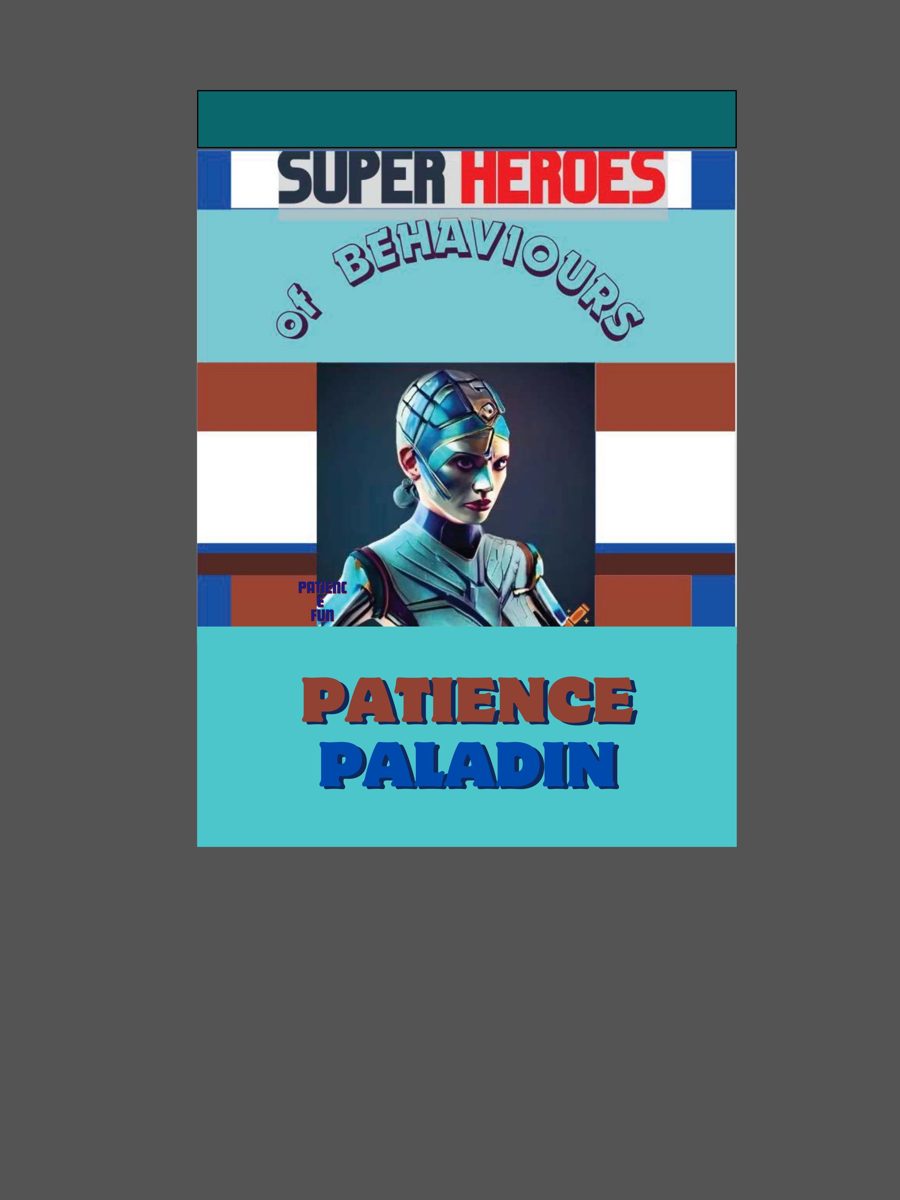
For the first few weeks she was miserable and impatient. She watched her team play without her and wanted to skip straight back to the pitch. When the physiotherapist gave her tiny exercises — gentle ankle circles, small balance drills — she scoffed. How could such little movements ever get her back to full speed? That was when the Patience Paladin found her sulking on the sidelines. "Big comebacks," the Paladin said, "are built from small, boring reps. There's no shortcut through healing."
Ella didn't like the answer, but she had no other option. So she did the exercises — the unglamorous, repetitive ones — morning and night. At first nothing seemed to change, and the temptation to rush, to test the ankle too soon, was constant. The Paladin kept reminding her: "Your job is to show up for the small work today, not to leap to the finish line."
Slowly, almost invisibly, things shifted. The balance drills got easier. The ankle grew steadier. Weeks of tiny efforts began to add up into something she could feel — a stable, trustworthy foundation that would never have come from rushing. Ella learned to notice the small gains that impatience would have blinded her to: a little more strength, a little more range, a little less pain.
When she was finally cleared to jog, she wanted to sprint, but she held herself back and built up gradually, the way the long weeks had taught her. Months after the injury, she stepped back onto the pitch. She wasn't instantly the fastest player again, but she was steady and strong, and her comeback was real — not a reckless gamble that reinjured her, but a rebuild that lasted.
Standing on the field again, Ella understood what the Patience Paladin had been telling her all along. Patience wasn't sitting around doing nothing while she healed. It was the quiet strength of doing the small, dull work faithfully, trusting that it was adding up even when she couldn't yet see it. Good things — including comebacks — really did grow for those who were willing to wait and keep showing up.
Your turn — short-answer questions
- Ella "measured everything in speed" and wanted to rush her recovery. How did doing the small, boring exercises faithfully help her make a real comeback?
- The Patience Paladin says there's "no shortcut through healing." Describe a goal of yours that can't be rushed, and one small piece of daily work that would move you toward it.
For the classroom
Teacher notes — activities, reflections and assessment for this story.
Discussion: Ella thought the tiny exercises were pointless. Why do small, repeated efforts often feel useless in the moment even when they're working?
Activity — Small Reps Log: Have students choose a goal that needs steady work and log one small effort each day for two weeks, then reflect on the progress.
Activity — Spot the Gain: Ask students to track a slow-improving skill and note the tiny gains they'd normally overlook, discussing how noticing progress supports patience.
Reflection: Describe a time you wanted to rush something that needed time. What did rushing cost you, or what did waiting give you?
Kiran's Tuesdays
Kiran signed up for the peer reading programme in Year 10 for slightly dishonest reasons. It ran on Tuesday lunchtimes, it looked good on a leadership application, and he had imagined something fairly straightforward: a grateful Year 7, a book, a nice story to tell at the end of the term. Instead he got Freddie, who arrived eleven minutes late to their first session with his hood up, answered every question with one word or a shrug, read four lines aloud in a flat mumble, and then asked if he could go. The bell rang. Kiran sat in room B7 afterwards, feeling as though he had done something wrong without knowing what.
It did not improve. Freddie came late, or came and said nothing, or did not come at all — two weeks running in May, while Kiran waited out the entire lunch hour next to an empty chair. Meanwhile the futsal comp ran on Tuesdays, and his mates had stopped asking whether he was playing, because the answer was always no. Nobody thanked him. Freddie never once said he was glad Kiran was there. By the end of Term 2, Kiran had a half-written email to the programme coordinator sitting in his drafts, explaining politely that it wasn't working and he'd like to be reassigned.
He was reading it over for the fourth time when the Patience Paladin sat down in the empty chair opposite him. "You're waiting for proof," the Paladin said. "Some sign that this is working, so you know it's worth the Tuesdays you're giving up." Kiran admitted that was about right. "People don't grow on your timetable," the Paladin said. "So use two rules instead. First: count the turn-ups, not the results. Put a tally at the back of your diary and add one mark every Tuesday you show up, whether or not he does. Second: never decide about forever. Only ever decide about next Tuesday."
So Kiran deleted the email and made a tally. He also changed a few things, since showing up was all he controlled. He stopped sitting directly opposite Freddie like an interviewer and sat beside him instead. He brought his own maths homework and did it quietly, so the room stopped feeling like a spotlight. He left a footy magazine on the table each week and said nothing about it. Freddie still barely spoke. But he started arriving closer to on time, and one week he read the magazine's back page out loud, unprompted, and then looked embarrassed about it. The tally reached nine marks. Kiran's mates found a replacement for futsal.
In week eleven, halfway through a page neither of them cared about, Freddie said, "I hate reading out. Someone laughed in Term 1 and now everyone waits for it." That was all. It took about six seconds. Kiran did not make a speech about it; he just said that made sense, and asked whether Freddie wanted to practise one paragraph until it felt easy, so he had one ready. They did that paragraph eleven times. It was not a film ending. Freddie missed the following Tuesday altogether, and the one after that he was late again. Kiran added the marks anyway, because that was the rule.
By the end of the year the tally had thirty-one marks in it and Freddie could read a paragraph aloud without his voice going flat and small. Kiran never got the thank-you he had quietly been waiting for in February, and he had given up two terms of Tuesdays to get a change he could barely measure. But he understood something by then that he had not understood in February. Patience was not sitting around hoping someone would hurry up. It was the quiet strength of turning up on someone else's clock instead of your own, without demanding proof along the way. Good things really do grow for those who wait — even when the growing is happening somewhere you cannot see it, inside somebody else.
Your turn — short-answer questions
- The Paladin told Kiran to "count the turn-ups, not the results" and to only ever decide about next Tuesday. Explain how those two rules kept Kiran going when nothing seemed to be changing.
- Being patient with Freddie cost Kiran two terms of lunchtimes with no thanks. Describe a person or situation in your own life that needs patience, and one small thing you could commit to for just one more week.
For the classroom
Teacher notes — activities, reflections and assessment for this story.
Discussion: Kiran was patient with a person rather than a skill. Why is waiting for someone else to change harder than waiting for your own progress?
Activity — Turn-Up Tally: Students choose a commitment involving another person — a sibling, a teammate, a group project partner — and keep a tally of turn-ups, not outcomes, for three weeks.
Activity — One More Tuesday: In pairs, students identify something they are close to quitting and rewrite the decision as a one-week commitment, then check in with their partner at the end of the week.
Reflection: Kiran never got the thank-you he was waiting for. Write about a time you helped someone without being thanked, and what you gained from it anyway.
Story 3 is part of the full pack
Unlock every hero's third story — plus all worksheets, quizzes and assessments — with a trial or a licence. Already have access? Open the link from your email on this device.