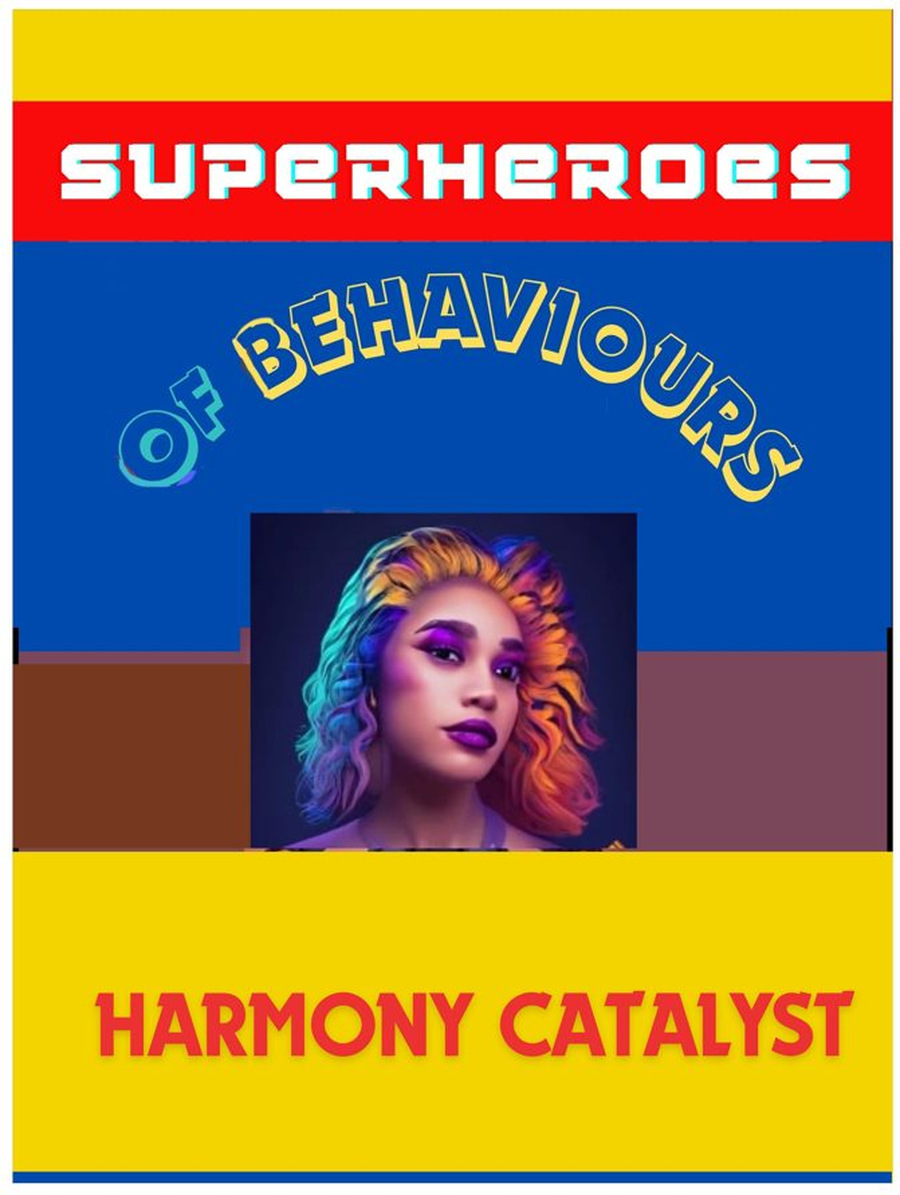
The Mural — Turning a Divided Class into a Masterpiece
When Ms Reyes announced that 9C would design a mural for the tired grey wall outside the art room, the class groaned rather than cheered. The project sounded fun, but everyone knew the truth: 9C did not work well together. The group had quietly split into camps that barely spoke — the sporty crowd near the window, the gamers at the back, the quiet artists in the corner, and a handful of students who drifted between them all, never quite belonging anywhere.
Leo was one of the drifters. He was not the loudest or the most talented, but he had a knack that he had never thought of as special: he made people feel welcome. When two groups started arguing over whether the mural should show a football pitch or a fantasy landscape, Leo did not take a side. Instead he asked a question. "What if it could be both? What if the wall showed all the things this class actually cares about?"
The room went quiet. It was such a simple idea that no one had thought of it. Leo grabbed a roll of butcher's paper and spread it across the floor. He invited everyone to sketch one thing they loved — a game controller, a netball, a favourite song lyric, a native bird, a skateboard. Slowly, students who had never spoken all year knelt on the same sheet of paper, sketching side by side.
It was not smooth. Two boys nearly fell out over whose design got the centre spot, and one girl almost gave up when she felt her drawing wasn't good enough. Each time, Leo stepped in — not to take charge, but to keep the peace. He offered honest encouragement, reminded people to actually listen to one another, and found a way for every idea to fit somewhere in the plan. When someone did something well, he said so, loudly and sincerely.
Over three weeks the grey wall came alive. The sporty crowd painted a bold sweep of colour that became a running track curving through a forest the artists had imagined. The gamers added pixelated creatures hiding in the trees. A shy student's lyric was lettered across the sky. Every camp had left its mark, and somehow the clashing pieces had blended into one striking, unified whole.
On the day it was unveiled, students from other years stopped to stare. Ms Reyes told Leo the mural was the best 9C had ever produced. Leo looked at the wall and understood something he would carry for the rest of his life. Unity did not mean everyone becoming the same or agreeing about everything. It meant making room for every voice until the differences themselves became the masterpiece. Life, he realised, really was a colourful canvas — and bringing people together to paint it was a kind of superpower all its own.
Your turn — short-answer questions
- Leo brought the class together not by taking sides but by asking a question and giving everyone a role. Explain how his approach turned a divided class into a united one.
- The mural worked because the class's differences were included rather than ignored. Describe a time you helped bring people together, or one thing you could do to build unity in a group you belong to.
For the classroom
Teacher notes — activities, reflections and assessment for this story.
Discussion: Leo built unity without becoming the leader or picking a winner. What specific things did he do to bring people together, and why did they work?
Activity — Class Canvas: Have students contribute one idea each to a shared collaborative project (a mural, playlist, or class charter) and reflect on how including everyone's voice changed the result.
Activity — Sincere Compliments: Ask students to give one genuine, specific compliment to a classmate they don't usually talk to, and discuss how offering and receiving positivity felt.
Reflection: Think of a group you belong to that feels divided. What is one small, positive action you could take to strengthen connection and cooperation?
Assessment — Unity in Action: Students plan and document a short project that brings a diverse group together, then submit a reflection evaluating how they promoted communication, teamwork and inclusion.
The Split Table
For as long as anyone could remember, the same eight friends had eaten lunch together at the long table by the window. Then, halfway through Year 9, something cracked. A misunderstanding in a group chat spiralled into hurt feelings, and by Monday the table had split cleanly in two — four friends at one end, four at the other, an invisible wall running down the middle. Nobody could quite explain how it had happened, only that it had.
Zara sat in the middle of it, miserable. She missed when the whole group had been one. She wasn't the leader of either half, and she didn't want to pick a side — she just wanted her friends back. That was when the Harmony Catalyst found her, staring at the gap between the two groups. "You can't force people to be friends again," the Catalyst said. "But you can give them a reason to stand on the same side."
Zara thought about it all week. The school was running a fundraiser for the local animal shelter, and teams could enter a bake-sale stall. On Friday she did something brave: she walked up to both ends of the table and asked, without taking sides, if they would run a stall together — one team, one goal. There were folded arms and doubtful looks, but the shelter was something everyone secretly cared about, and slowly, grudgingly, they agreed.
The first planning session was stiff. Then someone made a joke about a burnt tray of brownies, and someone else laughed before they remembered they were supposed to be annoyed. Zara kept things moving — she made sure both halves had real jobs, she noticed when someone was being left out, and she praised good ideas no matter which end of the table they came from. She didn't pretend the fallout hadn't happened; she just kept steering everyone toward the thing they shared.
By the day of the sale, the invisible wall had quietly come down. Standing shoulder to shoulder behind a table piled with cupcakes, arguing cheerfully about pricing and change, the eight of them looked like one group again. They raised more money than any other stall. More importantly, the friendship had found its way back — not because anyone had won the argument, but because they had been reminded of what united them.
Zara understood something that day. Harmony wasn't about forcing people to agree or pretending problems didn't exist. It was about finding the common ground people already shared and giving them a reason to stand on it together. Sometimes the fastest way to rebuild a broken group was simply to point everyone at the same goal.
Your turn — short-answer questions
- Zara "didn't want to pick a side." Instead of choosing between the two groups, what did she do to bring them back together?
- The Harmony Catalyst says you can give people "a reason to stand on the same side." Describe a shared goal or activity that could help bring together a group you know that has split apart.
For the classroom
Teacher notes — activities, reflections and assessment for this story.
Discussion: The friendship group split over a group-chat misunderstanding. Why do online messages so often cause fallings-out, and what makes them hard to repair?
Activity — Common Ground: In groups, have students list goals or interests they all share, then design a short project built around one of them.
Activity — Shared Goal Challenge: Set the class a cooperative task that can only succeed if everyone contributes, then reflect on how working toward one goal changed the group's mood.
Reflection: Zara rebuilt the group without picking a side. When have you helped repair a friendship or group, and what did you do?
The Line and the Door
Year 10 camp was three days of rafts, ropes courses and burnt sausages, and Rafi arrived with his people: Beau, Xavier and Riley, the four of them together since Year 7. Also on the bus was Deng, who had started at the school midway through Term 2 and still ate lunch on the edge of things, half in and half out of every group. Rafi had always thought of himself as one of the good ones. He said hello to everybody. He was the person teachers put next to a new kid, because he could talk to anyone, and he had never once thought of that as a responsibility.
It started small, the way these things do. Beau made a joke about the way Deng said certain words, and it stuck, and by the second morning it had become a running bit that the others repeated whenever Deng spoke. Riley counted the raft teams and somehow the count never included him. Nobody shoved anyone. Nobody said anything you could report. Rafi laughed the first time, out of reflex, and then spent the rest of the day telling himself it was not really his business, and that Deng did not seem to mind anyway. He knew, even while he was thinking it, that both of those things were lies.
That evening, filling water bottles at the tap behind the mess hall, he found the Harmony Catalyst leaning against the tank. "You're waiting for someone louder than you to fix this," the Catalyst said. Rafi started to explain that they were his best mates, and that one wrong word would blow up the whole group. The Catalyst let him finish. "Harmony has two halves," it said. "A line and a door. You say plainly where your line is, without going to war over it. Then you open a door wide enough that anyone can walk through, including the people you've just embarrassed. Most people only ever manage one half. A line without a door makes enemies. A door without a line just tells everyone that nothing happened."
The raft challenge was the next morning. Beau started up with the accent bit while they were lashing barrels together, and Rafi heard his own voice say, quite flatly, "Yeah, I'm not doing this one." No speech. No lecture. Then, before the silence could set: "Deng, you're with me." The temperature dropped immediately. Their raft came apart forty metres offshore and they finished last, soaked and laughing in the shallows, while Rafi spent the rest of the day being introduced by Beau as "our moral guidance counsellor". It stung more than he had expected. He had never been the killjoy of a group before, and he did not enjoy discovering how it felt.
On the last morning he opened the door. He walked past their cabin and said, without ceremony, "Beach run at seven. All of us. Deng's coming." Riley came straight away. Beau turned up two minutes late and said nothing about the day before, which was as close to an apology as Beau had ever got. Xavier did not come at all, and Rafi had to accept that as honest — you can hold a door open, but you cannot drag anyone through it. Back at school the group re-formed slowly and slightly differently over the following weeks, with Deng in it, and with a joke that nobody made any more.
Rafi thought about it for a long time afterwards. He had always assumed that being a peacemaker meant keeping everybody comfortable and never being the one to make things awkward. Camp had taught him the opposite. Unity did not mean smoothing things over until the harm became invisible; it meant being willing to be uncomfortable first, saying where the line sat, and then leaving a door open so people had a way back. Life really was a colourful canvas — and sometimes bringing people together meant risking your own place in the picture to make room for someone else's.
Your turn — short-answer questions
- The Catalyst said "a line without a door makes enemies. A door without a line just tells everyone that nothing happened." Explain why Rafi needed both halves, using examples from the story.
- Rafi's choice cost him standing with his closest friends. Describe a situation where you have seen someone quietly left out, and write the exact words you could use for your line and for your door.
For the classroom
Teacher notes — activities, reflections and assessment for this story.
Discussion: Rafi told himself it was not his business and that Deng did not mind. Why are bystanders so quick to believe those two things, and what changes when someone stops believing them?
Activity — Line and Door Scripts: In pairs, students write and rehearse a short line ("I'm not doing this one") and a matching door ("we're at the courts at lunch if you want in") for three realistic school scenarios.
Activity — The Quiet Exclusions: Groups list the low-level ways people get left out — being skipped in a count, an in-joke, a chat nobody adds you to — and rank them by how much damage they do.
Reflection: Rafi risked his own place in the group to make room for someone else. When has including someone cost you something, and what did you learn from it?
Story 3 is part of the full pack
Unlock every hero's third story — plus all worksheets, quizzes and assessments — with a trial or a licence. Already have access? Open the link from your email on this device.